
How to Treat Pigmentation, Step by Step
Pigmentation — dark spots, melasma, or an uneven skin tone — is one of the most common skin concerns, especially for South Asian skin, which produces more melanin and is more prone to visible discoloration after acne, sun exposure, or hormonal changes.
What causes pigmentation?
Most pigmentation falls into a few categories: post-inflammatory hyperpigmentation (marks left behind after a pimple or injury heals), melasma (patches often triggered by hormones and sun exposure), and sun-induced pigmentation from years of unprotected UV exposure.
What actually helps
- Brightening actives. Ingredients like glutathione, vitamin C and alpha arbutin work by slowing down excess melanin production, gradually fading discoloration over weeks.
- Consistency over intensity. Pigmentation responds to steady, daily use far more than occasional intensive treatments. Most people need 6–8 weeks before they see a visible shift.
- Sun protection, non-negotiably. Any brightening routine without daily SPF is working against itself — unprotected sun exposure re-triggers the same pigmentation you're trying to treat.
A simple routine to start with
Cleanse, apply a brightening cream formulated with glutathione and vitamin C, and follow with a broad-spectrum sunscreen every morning. In the evening, cleanse and apply the brightening cream again. Give it time — pigmentation is a slow process to build and an equally slow one to fade.
The Solution: Vash Glow Skin Brightening Cream
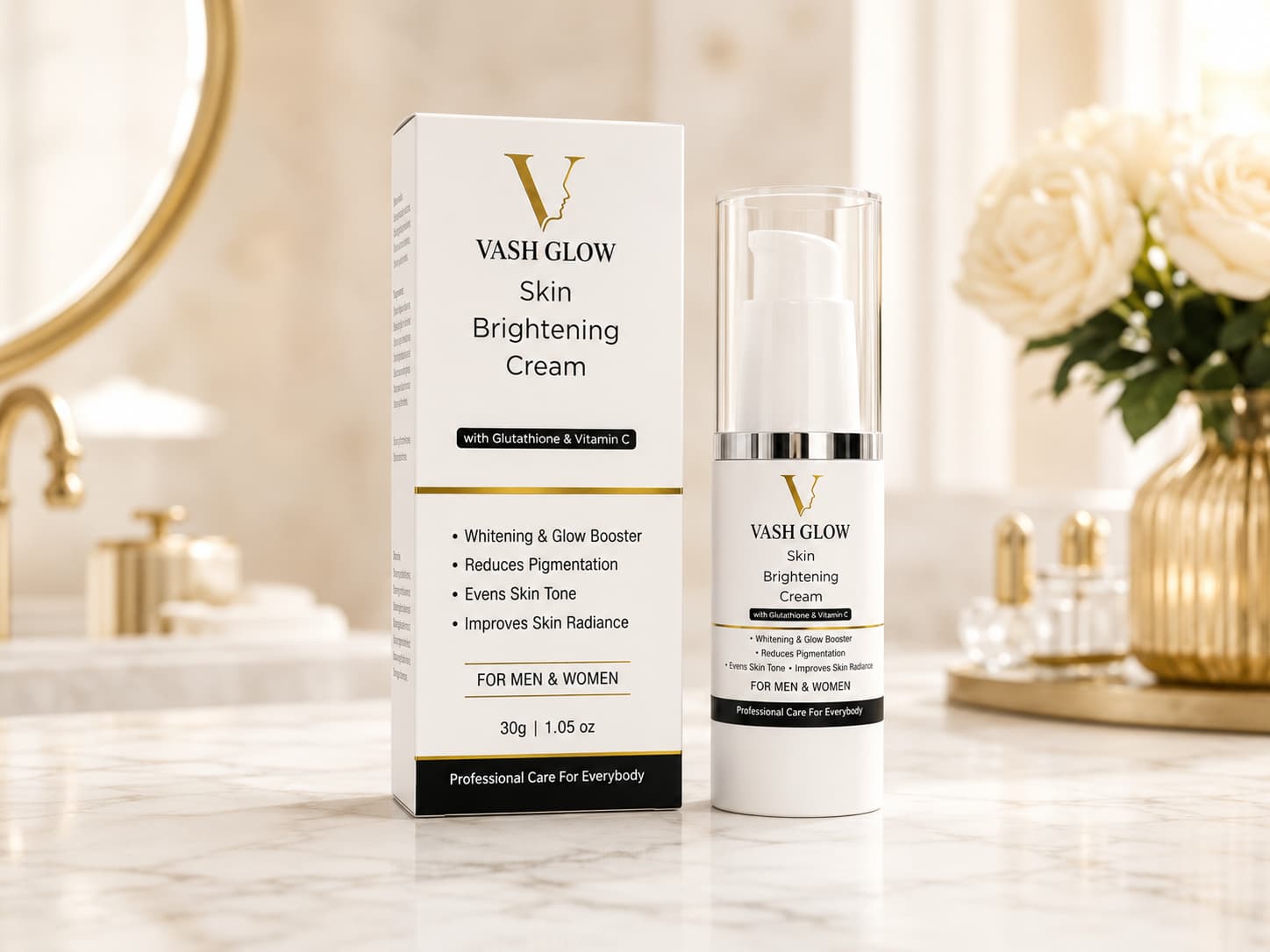
Vash Glow Skin Brightening Cream is formulated specifically to treat pigmentation at its source. Built around glutathione and vitamin C — two of the most researched brightening actives — it works to slow excess melanin production, gradually fading dark spots and evening out skin tone with twice-daily use. It's dermatologically tested and suitable for both men and women.
Related product: Advanced Brightening Face Wash
View Advanced Brightening Face Wash →